What is there to do in Sarandë by day?
Walk the seafront, climb to the castle, and look at the town's oldest stones. AKT lists the city promenade, Lëkurës Castle and the ruins of the old synagogue among Sarandë's sights, and it ranks the town among the sunniest in Albania.
Sarandë sits on the Ionian Sea, opposite the island of Corfu, so the sea is never far from the view. The bigger names around it (Butrint, the Blue Eye, Gjirokastër) are day trips of their own, covered further down.
When was Lëkurës Castle built, and why?
In 1537, during the Ottoman period: AKT credits Sultan Suleiman the Magnificent, who wanted to protect the port and control the sea and land routes against Venetian influence.
What stands today are the fortified walls and parts of the buildings inside them, a piece of the military architecture of the time. AKT calls it one of the most important historical fortifications in the area.
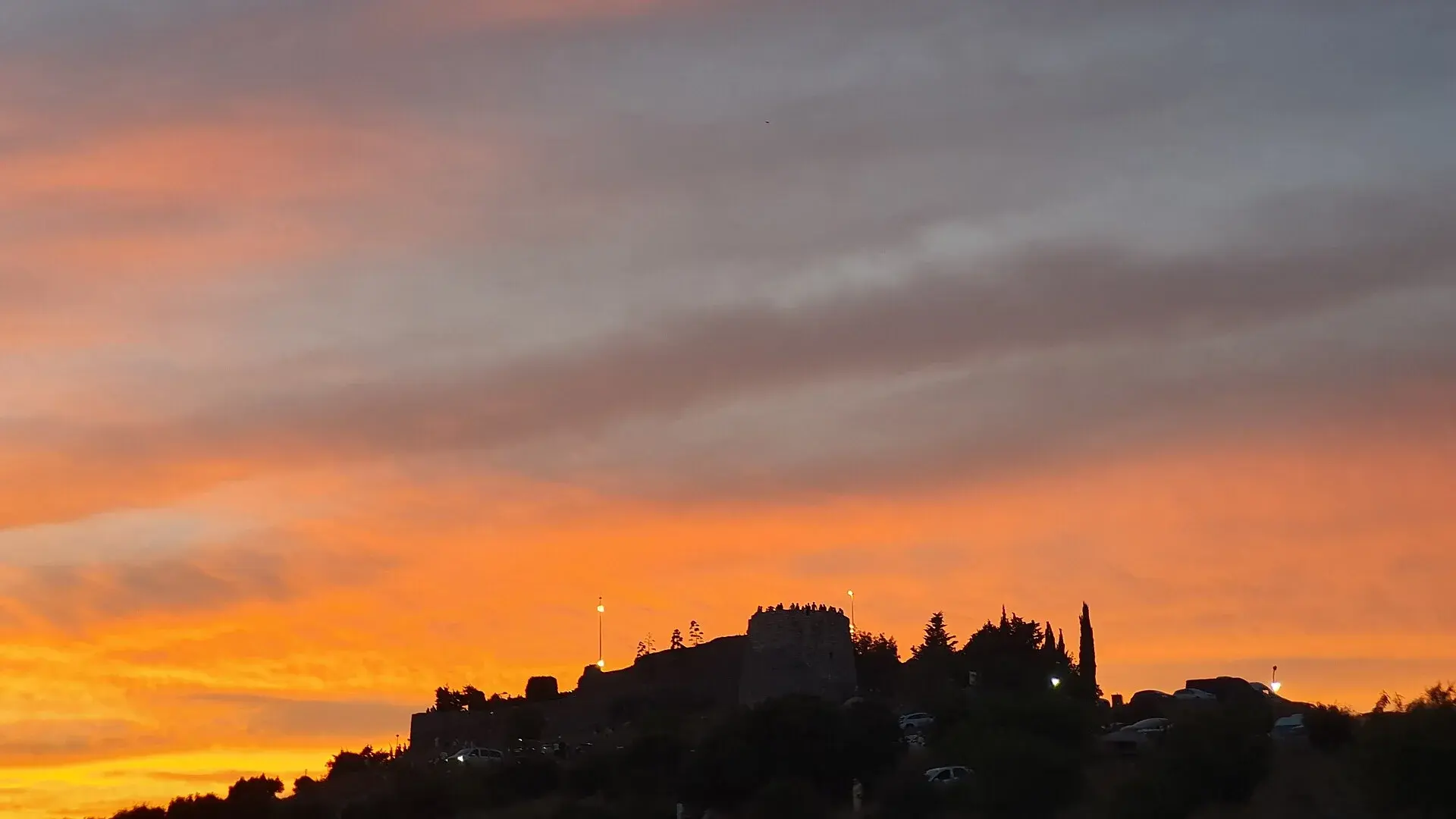
Why go up to Lëkurës at sunset?
Because the view is the point. From the walls, AKT notes, a panorama opens over the town, the coast and the Ionian Sea, and the evening is when the town below starts to light up.
Corfu lies across the water, opposite Sarandë, and the sun goes down over the sea on that side. A late afternoon on the hill leaves time to walk back down for dinner on the seafront.
What is the Sarandë promenade like?
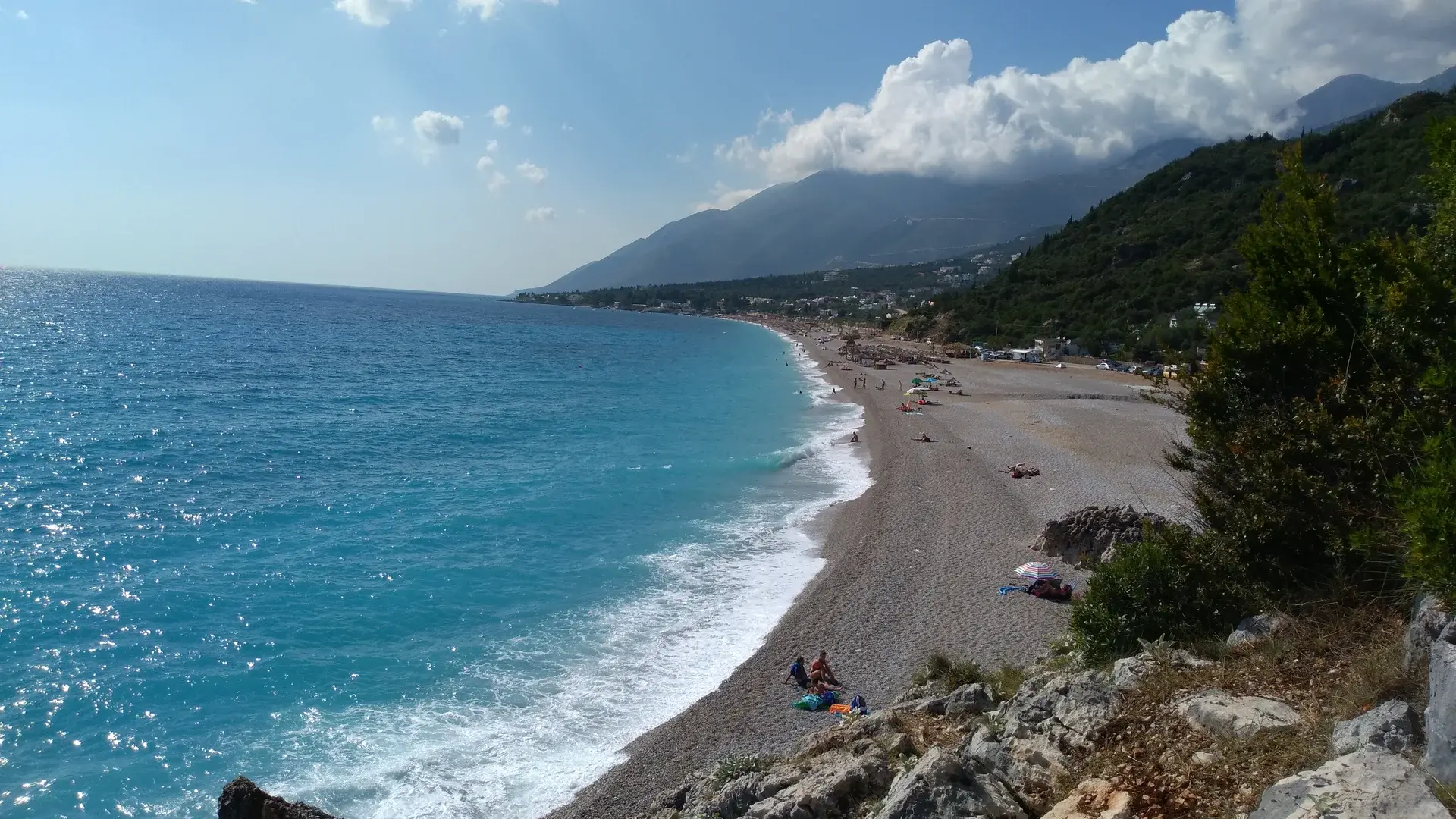
It is where the town spends its day. AKT describes it as one of the most frequented places for visitors and locals, along the Ionian coast, with sea views, quiet beaches and room for a walk, a coffee or dinner by the water.
Albania's beach rules apply here as anywhere on the coast: the sand is public, and the regulation sets how far umbrellas sit from the water. We explain them in the beach rules, as applied in Ksamil.
Where does the name Sarandë come from?
From a monastery. AKT explains that the ancient port was called Onhezmi and that, over the centuries, the town's name changed to Sarandë after the Monastery of the Forty Saints, a medieval religious centre of the area.
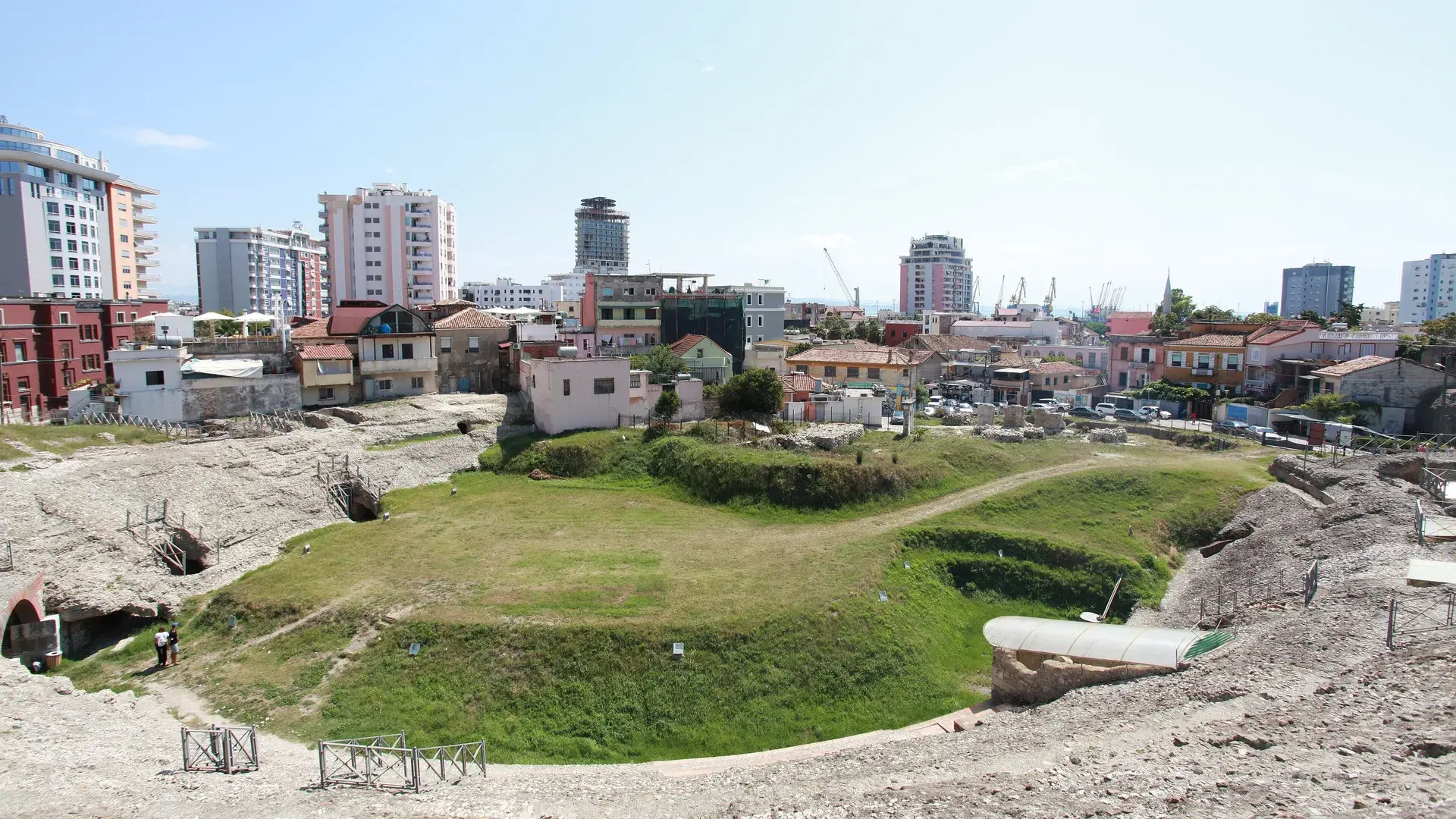
Onhezmi itself goes back to the Illyrian-Roman period: a harbour for trade between Epirus and the Mediterranean, fortified in Byzantine times. In the town centre, the ruins of the old synagogue are, in AKT's words, a testimony to the Jewish community that lived here.
What can you combine with Sarandë in a day?
Three classics, each with its own page here. Inland, the Blue Eye spring is a protected karst spring; to the south, Butrint National Park is part of the UNESCO World Heritage.
Further inland, Gjirokastër as a day trip from Sarandë is the third. Any of them fits before an evening back on the coast.
From the castle down to the night
Sarandë starts its nights early and by the sea. In summer 2026, the Vikingen boat party left the promenade at 17:30 and was back at 21:00, just as the town's club nights were getting ready.
The calendar of nights keeps the 2026 season and will list 2027 when it is published. If you are torn between the two towns, read Saranda or Ksamil for a night out.