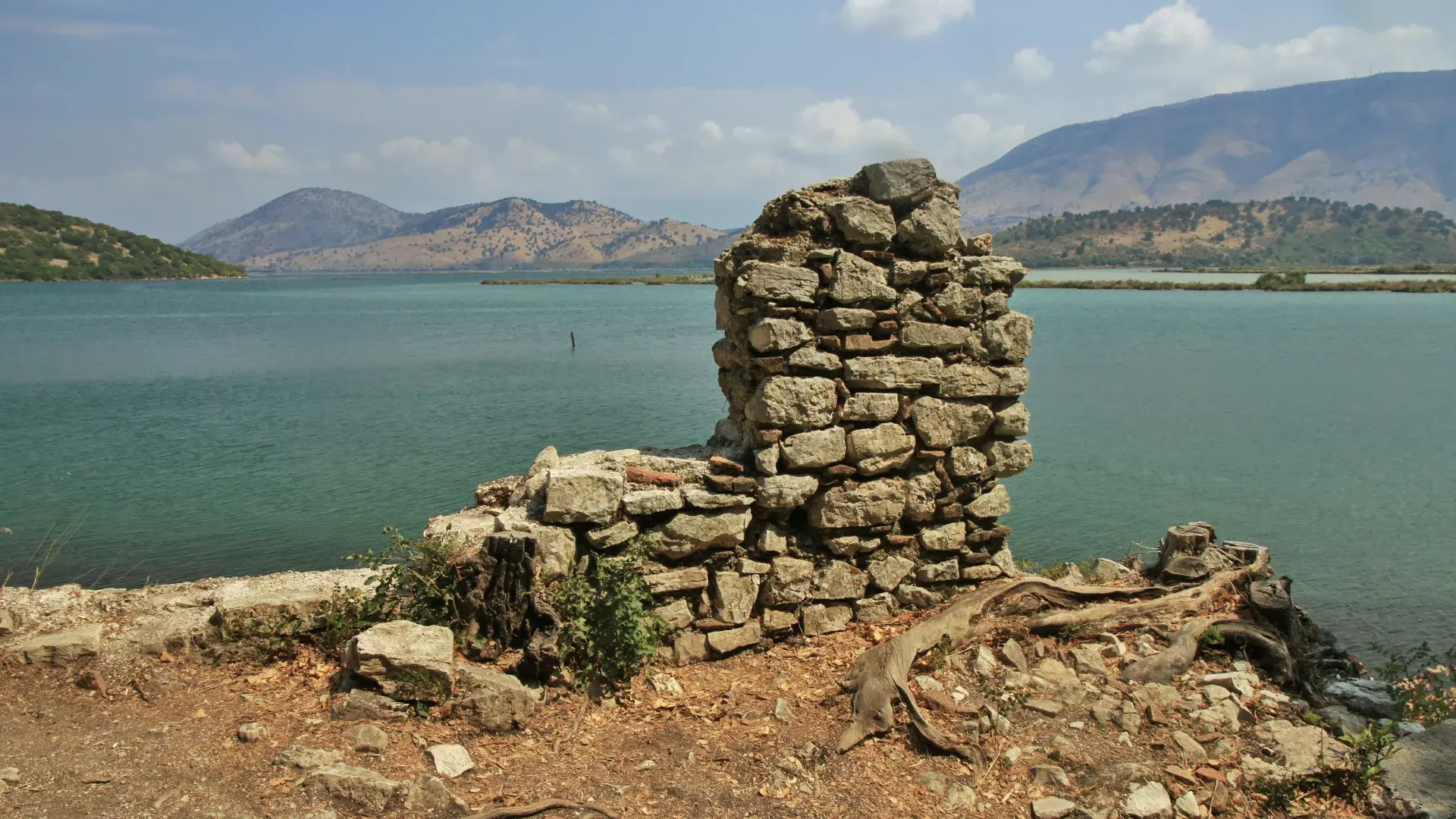
What is Butrint National Park?
It is the protected area around the ancient city of Butrint: since 2005, a national park of 86 km² that takes in Lake Butrint, the Vivari Channel and, on its western edge, the islets off Ksamil. It also serves as the buffer zone of the World Heritage site.
The archaeological site itself has been on UNESCO's list since 1992. UNESCO calls it a microcosm of Mediterranean history, with traces of occupation from 50,000 BC to the 19th century, all on a small hill wrapped by the lake and the channel.
Nature counts as much as stone. The wetlands are listed under the Ramsar Convention as a wetland of international importance, the Butrint forest has been protected since 1981, and at the mouth of the Vivari Channel stands the fortress Ali Pasha added in the early 19th century.
When is Butrint open?
On two timetables, depending on the season. The park gives the same hours on its own website and on its official online ticket page, and in November 2026 the winter timetable applies.
| Season | Opens | Last entry | Closes |
|---|---|---|---|
| 1 April – 31 October | 08:30 | 18:00 | 20:00 |
| 1 November – 31 March | 09:00 | 15:00 | 17:30 |
How much is a ticket to Butrint?
A standard ticket costs ALL 1,000, the same for Albanian and foreign visitors, at the counter or online. The half-price reductions for pensioners and students apply only to Albanian citizens.
| Ticket | Price per person |
|---|---|
| Standard, Albanian and foreign visitors | ALL 1,000 |
| Groups of 10 or more | ALL 800 |
| Children aged 12–18 | ALL 500 |
| Children under 12 | Free |
Can you buy Butrint tickets online?
Yes, on the park's official online ticket page, at the same ALL 1,000. An online ticket stays valid for one month from purchase and can't be refunded; a printout or the PDF on your phone both work at the gate.
Prices are in lek, Albania's currency: lek or euro in Albania explains what to carry for the counter and the rest of the day.
What is there to see in the ancient city?
A walk through three thousand years, from the Greek theatre to a Venetian castle on the acropolis. These are the stops the park and UNESCO single out, roughly in the order you meet them.
The theatre
UNESCO's pick among the Greek monuments, and fairly well preserved. The Italian archaeologist Ugolini uncovered it in 1928, in his very first season of digging.
The sanctuary of Asclepius
For much of its ancient history Butrint was a healing centre devoted to Asclepius, god of health: pilgrims slept in the sanctuary hoping for a dream that would cure them.
The baptistery
Built in the second quarter of the 6th century, it is the major early Christian ruin, and UNESCO singles out its mosaic floor.
The Great Basilica
Rebuilt in the 9th century and still easy to read: three naves, a transept and a polygonal apse.
The acropolis and its museum
At the top, inside the rebuilt Venetian castle, the museum first opened by the Italian mission in 1940, and reopened in October 2005, tells the city's story from prehistory to its decline.
How far is Butrint from Saranda and Ksamil?
About 20 km from Sarandë, according to UNESCO, and right next to Ksamil: the park's boundary takes in the islets off Ksamil's shore. The ancient city itself stands about 3 km from the Strait of Corfu.
We don't publish bus times or taxi fares, because we haven't found an official timetable or tariff for the trip. Whichever way you go, settle the return before you set off, especially in winter, when the gates close at 17:30.
When is the best time of day to visit in summer?
At either end of the day. From 1 April the gates open at 08:30 and take the last visitors at 18:00, so you can skip the middle hours altogether.
Carry water and something for your head: the monuments are spread around the hill and along the water, and you will be walking between them.
From the ruins to a Ksamil night
Ksamil, on the park's edge, is where the Riviera's nights run latest, so a summer evening at Butrint and Ksamil's beach clubs after dark sit naturally together; Saranda or Ksamil helps you pick the town for the night.
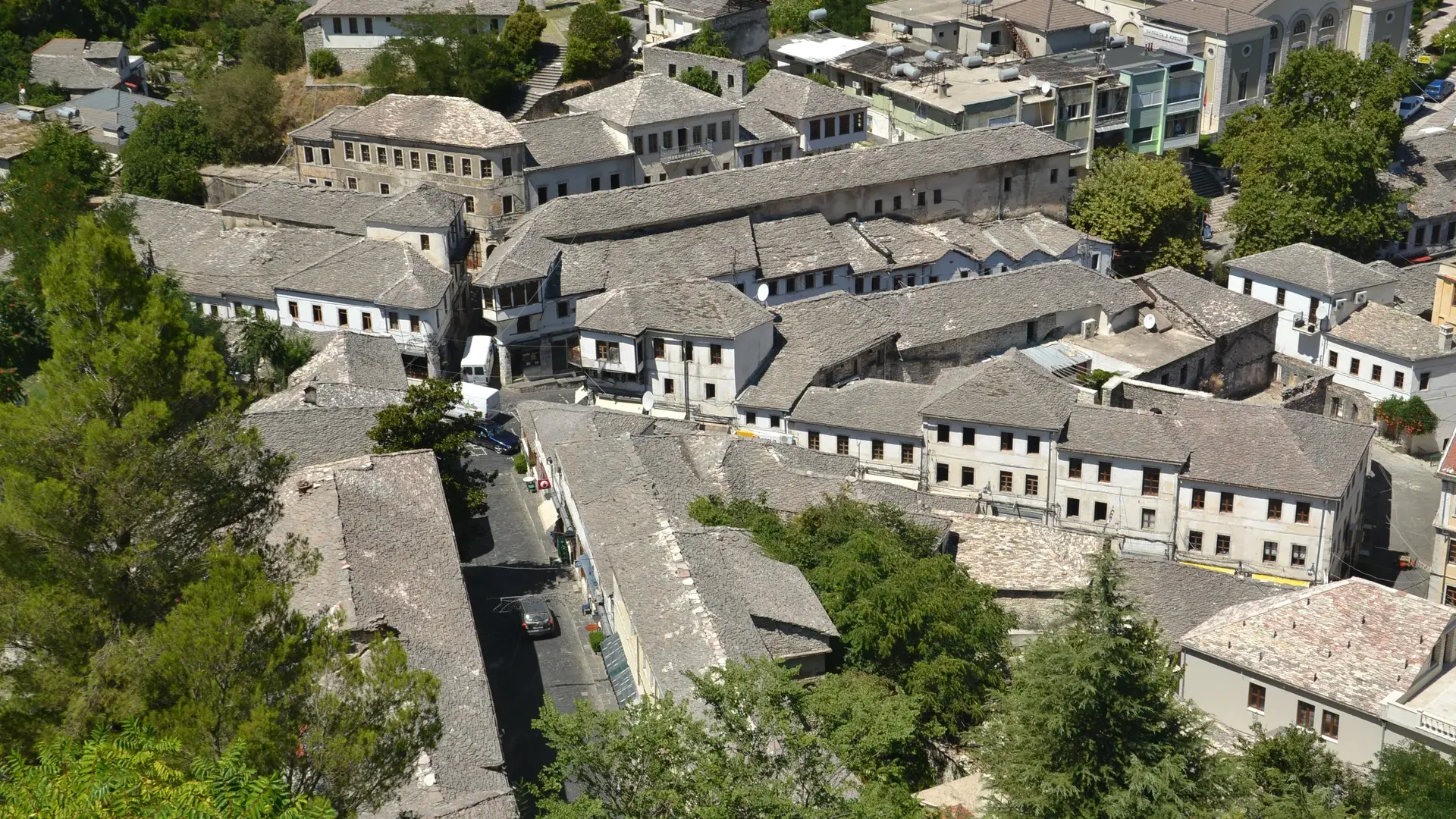
For a second UNESCO day, Gjirokastër, the town of stone, lies inland. Out of season nothing is on sale yet: the 2027 page shows the nights as soon as they are published.