What is Durrës beach like?
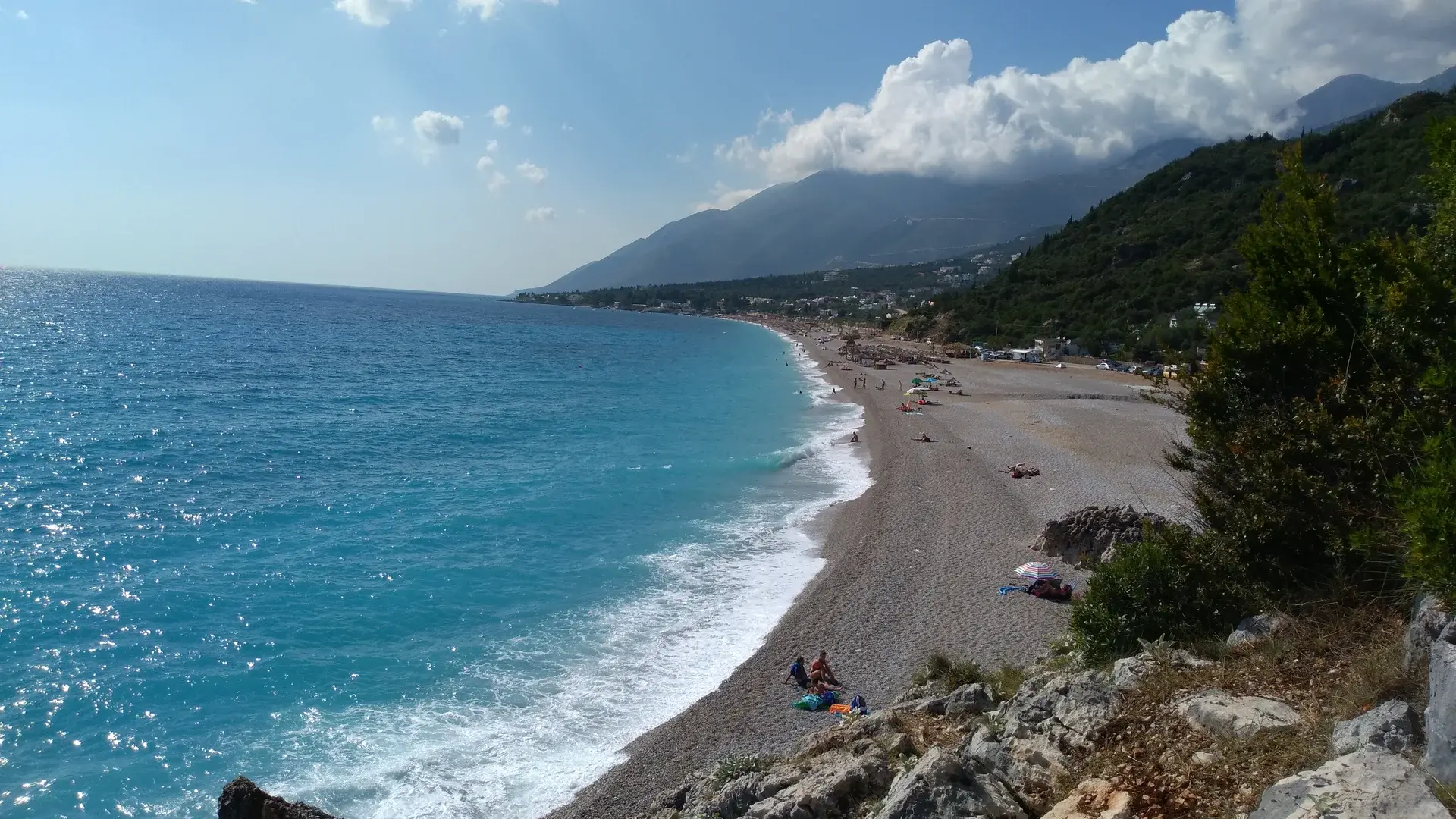
Wide, sandy and shallow. The National Tourism Agency calls Durrës Beach the largest and most famous in Albania, with fine sand and shallow water that suit families and children.
In the water there is swimming, pedal boats, kayaks and other water sports. Along the shore, the seaside promenade is made for long walks, seafood restaurants and the sunset.
Being very close to Tirana, it is the quick and easy beach for anyone staying in the capital. The city's coastline is long, and the agency describes its beaches as accessible and busy right through the tourist season.
Where is Golem, and how is it different from Durrës?
Golem is about 10 km south of Durrës, and it has a different setting: a long sandy beach lined with resorts rather than a city front. The agency counts it among the most popular sandy beaches on the Albanian Adriatic.
The sand is fine and the water shallow here too. Around it there are resorts, bars and restaurants; on the beach, games, walks by the sea and light water sports. Golem is also a favourite for camping and summer activities.
| Beach | Where | Sand and water | Around it |
|---|---|---|---|
| Durrës Beach | The city's own seafront, very close to Tirana | Fine sand, shallow water | Promenade, seafood restaurants, bars and clubs |
| Golem | About 10 km south of Durrës | Fine sand, shallow water | Resorts, bars, restaurants, camping |
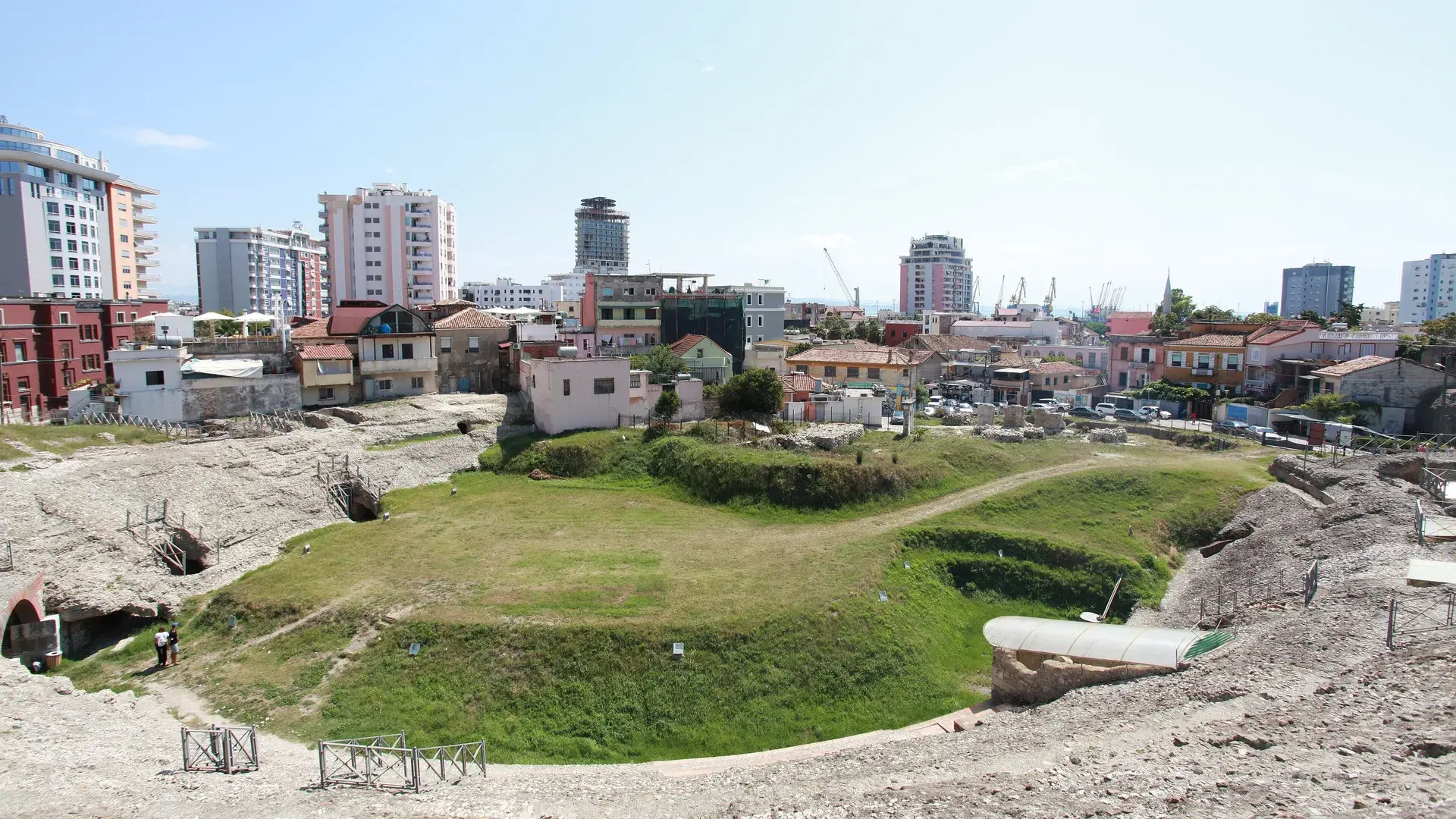
What is the Durrës amphitheatre?
A Roman amphitheatre in the centre of the city, a few metres from the Adriatic. It was built at the start of the 2nd century AD, under Emperor Trajan, and held about 15,000–20,000 spectators.
The municipality gives it a diameter of 136 m and a height of about 20 m. The National Tourism Agency considers it the largest Roman amphitheatre ever built on the Balkan Peninsula.
It lay hidden for centuries: the archaeologist Vangjel Toçi found it by chance in 1966, and the excavation ran until 1970. Today it is an archaeological site open to the public; neither the agency nor the municipality publishes its hours or ticket price online.
What else is there to see in Durrës?
A city with more than two and a half thousand years behind it. The agency dates Durrës to 627 BC and recalls that the Via Egnatia, the Roman road to Thessaloniki and Constantinople, started here; today it is Albania's largest seaport.
From the amphitheatre, the old stones are close together. The round Venetian Tower was built in the 15th century on top of a Byzantine one, 16 m across and 9 m high. The Byzantine walls, raised under Emperor Anastasius I (491–518), had a perimeter of 3.5 km and a height of 18 m, according to the municipality.
The Archaeological Museum, which the agency calls the largest in the country, holds Illyrian, Greek, Roman and Byzantine collections; its current building was inaugurated on 13 April 2002. The municipality also lists the Rotonda and Byzantine forum, the old market square of Dyrrachium, and the palace of King Zog I, built in 1937.
What is Durrës like on a summer night?
Lively along the sea. The National Tourism Agency says the nightlife in the bars and clubs of Durrës Beach makes it attractive to young people, and the promenade has become a modern space with restaurants, hotels, art galleries and cultural venues.
The city also hosts festivals, cultural events and exhibitions, which the agency mentions without dates; for the summer 2027 programme, the municipality is the place to ask.
None of the nights on this website are in Durrës. Ours ran in 2026 from June to September on the southern Riviera, and Saranda or Ksamil compares the two towns. If you start in the capital, Tirana by day covers the city before the coast, and Albania nightlife puts the whole map on one page.